
Help the Body Heal Itself with Cat and Dog Stem Cell Therapy in Oakland, CA
When arthritis, ligament damage, or another chronic condition limits your pet’s comfort and mobility, regenerative medicine may offer another way to support healing. Rather than focusing only on managing symptoms, cat and dog stem cell therapy uses your pet’s own cells to encourage repair within damaged tissues.
At Holistic Veterinary Care in Oakland, CA, we offer an advanced regenerative approach utilizing Very Small Embryonic-Like Stem Cells (VSELs) and Platelet-Rich Plasma (PRP) obtained from the patient's own blood. This approach is most commonly used for orthopedic conditions, but research continues to explore additional applications involving inflammation and organ health.
If your pet is living with arthritis, a tendon or ligament injury, or another ongoing condition, schedule a consultation to find out whether stem cell therapy may be an option.
What Is Regenerative Medicine for Dogs and Cats?
Regenerative medicine focuses on helping the body repair or restore damaged tissues. One of the primary tools used in cat and dog regenerative medicine is stem cell therapy.
Stem cells are unique because they can develop into different types of cells depending on what the body needs. Advances in veterinary medicine now allow doctors to collect, concentrate, and activate a pet’s own stem cells so they can be used therapeutically.
Once administered, these cells may help support tissue repair while also influencing inflammation and the body’s natural healing response.
What Conditions Can Regenerative Therapy Help in Pets?
At HVC, regenerative medicine may be considered as part of an individualized treatment plan for conditions including:
-
Osteoarthritis and degenerative joint disease
-
Joint pain and inflammation
-
Tendon and ligament injuries
-
Other selected musculoskeletal injuries
-
Selected chronic inflammatory and degenerative conditions for which regenerative therapy may be appropriate
Research into VSELs and regenerative medicine continues to evolve, and not every patient or medical condition is an appropriate candidate. Our veterinarians evaluate each patient's diagnosis, overall health, conventional treatment options, and individual treatment goals before recommending regenerative therapy.
What Are VSEL Stem Cells?
Very Small Embryonic-Like Stem Cells, or VSELs, are a naturally occurring population of very small stem cells that have been identified in adult tissues and peripheral blood. Research has shown that VSELs express characteristics associated with pluripotent stem cells and may be mobilized into the bloodstream in response to tissue injury and physiologic stress.
Unlike embryonic stem cells, VSELs are naturally present within the patient's own body. Research into their biological role and potential applications in tissue repair and regenerative medicine is ongoing.
How Is VSEL Therapy Different From Traditional Stem Cell Therapy?
Traditional veterinary stem cell therapy generally utilizes mesenchymal stem cells (MSCs) obtained from tissues such as fat or bone marrow. Collecting these cells may require sedation or anesthesia and a surgical procedure to obtain the tissue sample.
The VSEL procedure used at HVC is different. VSELs are obtained from a blood sample, eliminating the need to surgically harvest fat or bone marrow.
The patient's blood is processed to produce platelet-rich plasma (PRP) containing platelets, naturally occurring growth factors, and VSELs. Because the entire process begins with the patient's own blood, both the VSELs and PRP are autologous, meaning they come from the patient being treated.
SONG Laser Technology
Once the blood has been processed, the VSEL-containing PRP is exposed to specialized Strachan-Ovokaitys Node Generator (SONG) modulated laser light, a technology developed by Dr. Todd Ovokaitys and Scott Strachan.
Published laboratory research examining human VSELs in PRP found increased proliferation-associated findings following exposure to SONG-modulated laser light compared with controls. Researchers continue to investigate exactly how this interaction occurs and its potential applications in regenerative medicine.
At HVC, this technology allows us to incorporate the patient's own VSELs and PRP into an individualized regenerative medicine treatment plan without requiring surgical collection of stem cells.
What Is Platelet-Rich Plasma (PRP)?
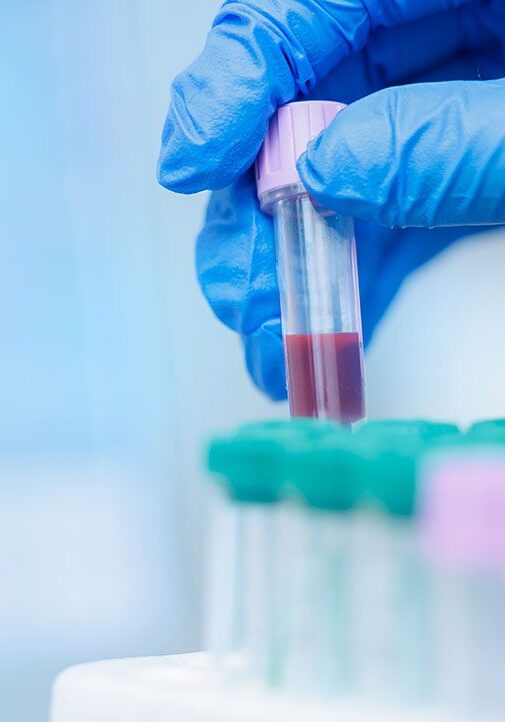
PRP is produced by concentrating components of the patient's own blood. Platelets are best known for their role in blood clotting, but they also contain numerous growth factors and signaling molecules involved in the body's natural healing response.
PRP can be used independently of the VSEL component when appropriate. For patients with arthritis or certain orthopedic injuries, for example, PRP may be injected directly into an affected joint or injured tissue to support healing and help reduce pain and inflammation.
Because the VSEL procedure produces PRP as part of the same blood-processing procedure, the two regenerative approaches can be used together or targeted differently depending on the needs of the individual patient.
What Should I Expect with VSEL and PRP Therapy?
Your pet’s regenerative medicine journey starts with a consultation. Our veterinarian will review their diagnosis, medical history, current treatments, overall health, and treatment goals to determine whether VSEL therapy, PRP, or a combination of the two may be appropriate.
Unlike traditional stem cell procedures that may require fat or bone marrow to be surgically collected, the VSEL approach used at Holistic Veterinary Care begins with a blood draw. Your pet’s blood is then processed to concentrate platelet-rich plasma containing platelets, growth factors, and naturally occurring VSELs.
The VSEL-containing PRP is exposed to specialized SONG-modulated laser light before being prepared for treatment. Depending on your pet’s condition, the regenerative material may then be administered directly to an affected joint or tissue, or used in another way determined by the veterinarian.
After treatment, we’ll provide instructions based on your pet’s condition and the area treated. Follow-up may include monitoring comfort and mobility, adjusting activity, and incorporating other therapies such as rehabilitation, acupuncture, or conventional medical care.
Because regenerative medicine is highly individualized, there is no single recovery timeline or treatment schedule for every pet. We’ll monitor your pet’s response and determine whether additional treatment or supportive care may be beneficial as they progress.
Book online or call us to schedule a regenerative medicine consultation and find out whether stem cell or PRP therapy could offer your pet another opportunity to heal.