
Clear Answers About Veterinary Cannabis in Oakland, CA
Cannabis has received increasing attention in veterinary medicine as researchers learn more about how cannabinoids may influence pain, inflammation, neurologic function, behavior, and other physiologic processes. At Holistic Veterinary Care in Oakland, CA, we believe veterinary cannabis and cannabinoid therapy can be a useful component of integrative veterinary care for appropriately selected patients.
At the same time, cannabis is not a single medication, and it is not appropriate for every pet or every condition. Different products contain very different concentrations and combinations of cannabinoids, and animals — particularly dogs — can respond differently than people. Product selection, cannabinoid composition, dosing, concurrent medications, and monitoring all matter.
What Is Cannabinoid Therapy for Dogs and Cats?
Cannabinoid therapy refers to the use of cannabis-derived compounds as part of a veterinary treatment plan. Veterinarians look at the specific cannabinoids involved, how they interact with the body, and whether a particular formulation is appropriate for the individual patient.
What Are Cannabinoids?
Cannabis contains numerous naturally occurring compounds called cannabinoids. The two most familiar are cannabidiol (CBD) and tetrahydrocannabinol (THC), but the plant contains many additional cannabinoids and other biologically active compounds.
CBD (cannabidiol) is non-intoxicating and is currently the most extensively studied cannabinoid in veterinary medicine. Research has investigated CBD for conditions including osteoarthritis and chronic pain, epilepsy, inflammatory skin disease, and behavioral conditions.
THC (tetrahydrocannabinol) is responsible for many of the intoxicating effects associated with cannabis. Dogs can be particularly sensitive to THC, and excessive exposure can cause significant neurologic and other adverse effects. For this reason, THC exposure requires considerably more caution in veterinary patients.
What Is the Endocannabinoid System in Dogs and Cats?
Animals naturally possess an endocannabinoid system (ECS)—a network of receptors, signaling molecules, and enzymes involved in maintaining normal physiologic balance.
The endocannabinoid system participates in the regulation of numerous processes, including pain perception, inflammation, neurologic activity, appetite, gastrointestinal function, immune responses, mood, and responses to stress.
Cannabinoids derived from cannabis can interact directly or indirectly with this system. This interaction is one reason cannabinoids are being investigated for such a broad range of potential medical applications.
What Conditions May Benefit From Cannabis or Cannabinoid Therapy in Pets?
Veterinary research into cannabinoid therapy is expanding, but the amount and quality of evidence varies significantly by condition.
Some of the strongest veterinary clinical evidence for CBD involves osteoarthritis and chronic musculoskeletal pain in dogs. Several clinical studies have reported improvements in measures of pain, activity, or mobility.
However, the evidence is not yet definitive. Systematic reviews have emphasized differences among products and study designs and limitations in the certainty of the available evidence.
At HVC, cannabinoid therapy may therefore be considered as one component of a multimodal pain-management program, which can also include conventional medications, acupuncture, rehabilitation, regenerative medicine, supplements, weight management, and other appropriate therapies.
CBD has also been studied as an adjunctive therapy for dogs with difficult-to-control idiopathic epilepsy.
Clinical trials have reported reductions in seizure frequency in some dogs, but the evidence remains limited and additional high-quality research is needed regarding efficacy, optimal dosing, and adverse effects.
Cannabinoids should therefore not be viewed as a replacement for appropriate anticonvulsant therapy, but CBD may be considered as an adjunct in selected patients under veterinary supervision.
Cannabinoids are also being investigated for conditions including inflammatory skin disease, behavioral and anxiety-related disorders, postoperative pain, and other inflammatory conditions. Research in these areas is promising but remains limited, and the evidence is not equally strong for every indication.
For this reason, HVC evaluates cannabinoid therapy based on the individual patient rather than assuming that cannabis is appropriate for every condition.
Cannabinoids have demonstrated interesting effects in laboratory and preclinical cancer research, including effects on cellular signaling, inflammation, and cancer-cell behavior. However, this is very different from demonstrating that cannabis effectively treats cancer in veterinary patients.
At this time, we do not consider cannabis a proven treatment for cancer.
Cannabinoid therapy may nevertheless have a role in the supportive care of selected cancer patients—for example, as part of an individualized plan addressing comfort, pain, appetite, nausea, sleep, or overall quality of life.
Is CBD Safe for Dogs and Cats?
CBD appears to be reasonably well tolerated by many dogs at doses evaluated in clinical studies, but “natural” does not mean risk-free.
Reported adverse effects include gastrointestinal upset, changes in appetite, sedation or somnolence, ataxia, and elevations in liver enzymes—particularly alkaline phosphatase (ALP). These findings are one reason we may recommend laboratory monitoring for patients receiving cannabinoid therapy, particularly with higher doses or long-term use.
Cannabinoids may also interact with other medications. Your veterinarian should therefore know about all medications and supplements your pet is receiving before cannabinoid therapy is started.
Research in cats remains considerably more limited than research in dogs, so recommendations for feline patients require additional caution.
Is THC Safe for Pets?
THC deserves particular attention because dogs are susceptible to cannabis intoxication.
Signs of excessive THC exposure can include sedation, disorientation, loss of coordination, urinary incontinence, abnormal responses to stimuli, changes in heart rate or body temperature, and other neurologic signs.
Human cannabis products should therefore never simply be given to a pet based on a human dose or serving size.
California regulates cannabis products intended for animals. As of January 1, 2026, regulated animal cannabis products may contain no more than 1 mg of total THC per package.
Why Does Cannabis Product Quality Matter for Pets?
One of the greatest challenges in veterinary cannabinoid medicine is that products are not interchangeable.
Two products labeled as containing CBD may differ substantially in cannabinoid concentration, THC content, formulation, absorption, purity, and consistency. Product labels alone may not provide enough information to determine whether a product is appropriate for a particular animal.
Whenever possible, products used for pets should have reliable cannabinoid concentrations and appropriate independent laboratory testing for potency and contaminants.
At HVC, we can help pet owners understand what is actually in a cannabis product, whether its cannabinoid profile is appropriate, and how it fits into the patient's overall treatment plan.
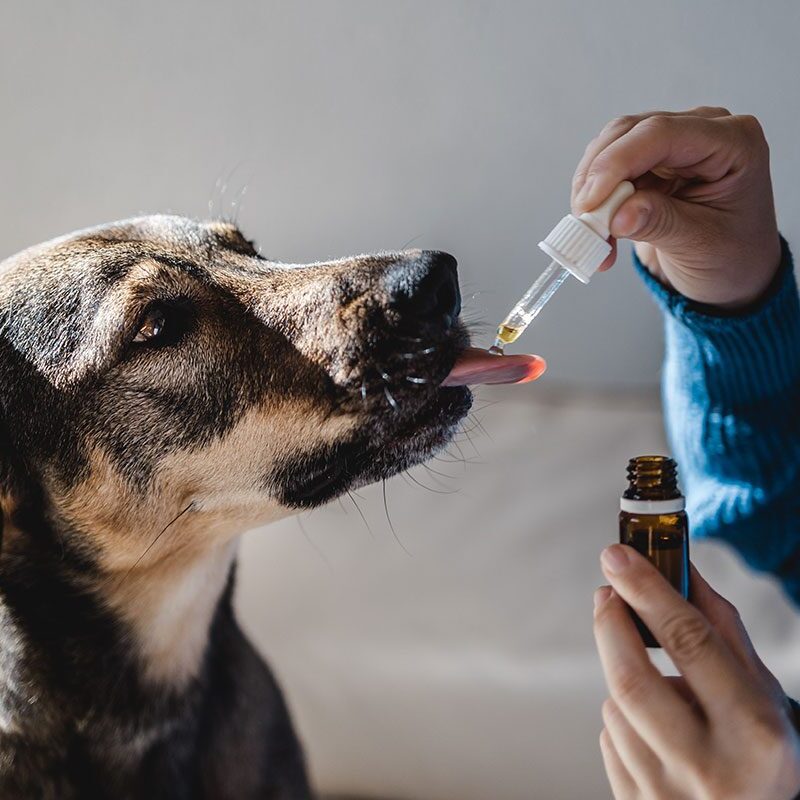

Why Is Veterinary Guidance Important for Cannabis Use in Pets?
Cannabinoid therapy works best when it is treated like any other medical therapy: the right patient, the right product, the right dose, and appropriate monitoring.
At HVC, we consider your pet's diagnosis, age, overall health, medications, laboratory findings, treatment goals, and other conventional and integrative therapies before making a recommendation.
California law permits veterinarians to discuss and recommend cannabis for potential therapeutic effects or health-supplementation purposes within a veterinarian-client-patient relationship. Veterinarians may not dispense or administer cannabis products themselves.
Our goal is to help pet owners navigate cannabinoid therapy using the same principles we apply throughout integrative medicine: use the best available scientific evidence, recognize the limitations of that evidence, monitor the individual patient, and adjust treatment based on response.
Schedule a consultation at Holistic Veterinary Care to determine if cannabis can help your pet.
Get Dr. Gary Richter's Free Guide to Cannabis for Pets
Trying to research cannabis online can quickly lead you into a maze of conflicting claims.
Dr. Richter's “Top 10 Ways to Use Cannabis Safely & Effectively for Pets” offers a starting point for pet owners who want to learn more about cannabinoid therapy and make more informed decisions.